What is Orthopedic Locking Plates Benefits and Uses?

Time:2026-03-30 Author:Charlotte
0%

Orthopedic locking plates have become integral to modern orthopedic surgery. These innovative devices provide enhanced stability in the fixation of fractured bones. According to a 2023 report by the Journal of Orthopedic Research, the use of orthopedic locking plates has increased by over 30% in the past five years. Dr. Emily Carter, a leading orthopedic surgeon, notes, “The precision and strength of orthopedic locking plates significantly improve patient outcomes.”

The primary advantage of orthopedic locking plates lies in their ability to engage with bone fragments securely. This design minimizes the risk of implant failure and promotes better healing. However, despite their benefits, complications can arise. The surgical approach and patient conditions often dictate outcomes. Continuous training and adaptation are essential for surgeons in this evolving field.

While orthopedic locking plates are highly effective, the technique requires careful assessment. Each case is unique; tailoring the approach to the patient's specific needs is critical. There is no one-size-fits-all solution. Understanding the limitations and potential complications remains crucial for delivering optimal care.
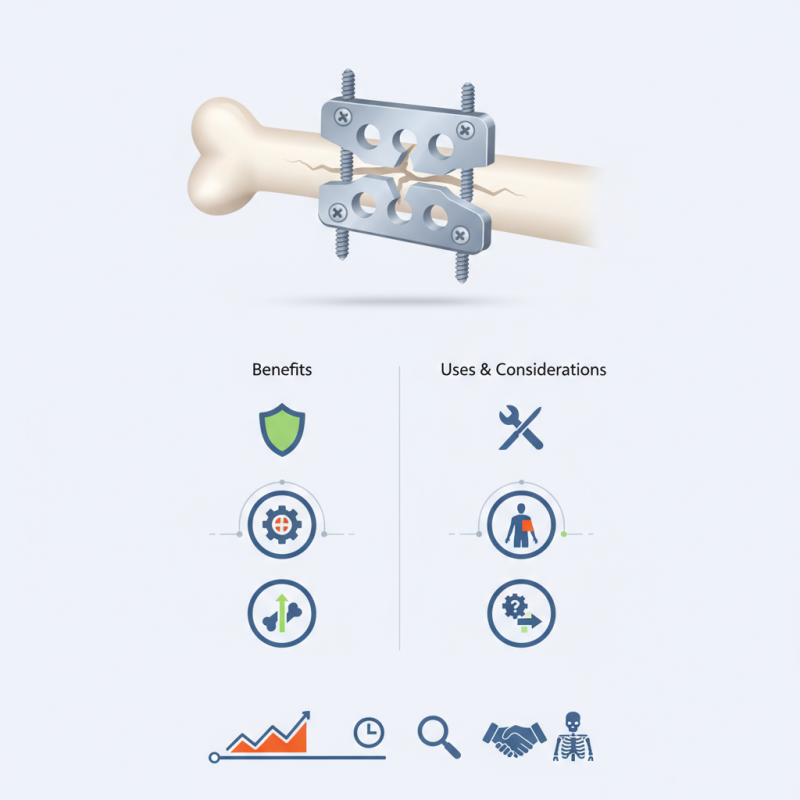
What is Orthopedic Locking Plates Benefits and Uses?

Overview of Orthopedic Locking Plates

Orthopedic locking plates are crucial in modern orthopedic treatments. They provide stable fixation for bone fractures and enhance healing. These plates use locking screws that maintain their position regardless of bone movement. This feature is vital for complex fractures where traditional plating methods might fall short. Research indicates that locking plates can reduce nonunion rates in certain fractures by up to 30%.

When considering the use of orthopedic locking plates, surgical techniques and patient factors play a significant role. The ideal application is for diaphyseal fractures, intra-articular fractures, and osteoporotic bones. However, they may not be suitable for all cases. Surgeons need to weigh the risks, such as potential complications like infection or stiffness.

Tips: Always discuss the surgical plan with your orthopedic surgeon. Understanding the specifics can help mitigate fears and improve outcomes. Post-operative care is equally important. Adhering to rehabilitation protocols ensures proper recovery and maximizes the benefits of locking plates.

Mechanism of Action and Design Features

Orthopedic locking plates are innovative devices used in fracture fixation. Their design features allow for superior stability in broken bones. They work by using a locking mechanism to secure screws to the plate. This unique feature ensures that the plate and screws act as a unified structure. When loaded, this system reduces the risk of micromotion at the fracture site.

The mechanism of action involves creating fixed-angle constructs. This offers increased strength and stability. The plate is contoured to fit the bone surface, allowing for optimal load distribution. Importantly, the locking screws prevent screw migration. This design aspect minimizes complications such as loosening or failure.

Tip: When considering locking plates, consult with a specialist familiar with various fixation methods.

While locking plates offer many benefits, they may not be suitable for all cases. Some complex fractures may require additional support or alternative methods. Surgeons must evaluate each patient's specifics to ensure effective treatment. This highlights the importance of tailored approaches in orthopedic care.

Tip: Keep abreast of new research on orthopedic devices. Understanding advancements can help in making informed decisions.

Benefits of Using Locking Plates in Orthopedic Surgery

Locking plates have transformed the field of orthopedic surgery. They provide stable fixation of bone fragments, which is crucial for healing. These plates use locking screws to hold bones together. This design prevents movement at the fracture site. Thus, it promotes faster and more reliable recovery.

One major benefit is reduced soft tissue disruption. Traditional methods often require extensive exposure of the fracture. Locking plates can be applied with minimal incision. This leads to less pain and faster rehabilitation. Surgeons appreciate the ability to maintain blood supply to the surrounding tissue. It is essential for healing and reduces the risk of complications.

Tips: Always discuss your recovery plan with your surgeon. Understand the purpose of the chosen fixation method. Don't hesitate to ask questions about the expected outcomes. Regular follow-up appointments are vital to monitor healing progress. Reflect on your pain levels as recovery progresses. It helps you and your doctor adjust the treatment plan if necessary.

Common Clinical Indications for Locking Plate Use

Locking plates have revolutionized orthopedic surgery. Their designs promote stable fixation in challenging fracture scenarios. Common indications for their use include complex fractures, osteoporotic bone, and certain non-unions. Studies indicate that approximately 80% of complex fractures benefit from locking plates. This stability is crucial for ensuring optimal healing.

In cases of osteoporotic fractures, surgeons often face challenges due to the fragile nature of the bone. Locking plates provide a secure fit, enabling surgeons to address these intricacies effectively. Research indicates that patients with osteoporotic fractures treated with locking plates experience a 60% reduction in re-fracture rates compared to traditional methods.

Moreover, certain non-unions, where fractures fail to heal, can significantly impact patient recovery. Locking plates facilitate bone healing in such complex scenarios. Their customized locking mechanism offers consistent compression, enhancing recovery. Yet, it's essential to acknowledge that improper placement of locking screws may compromise outcomes. Continuous training and adherence to best practices are necessary to mitigate these risks.

What is Orthopedic Locking Plates Benefits and Uses? - Common Clinical Indications for Locking Plate Use

Indication Benefits Typical Uses
Fracture Fixation Provides stability and improves healing time. Used in complex fractures of long bones.
Osteoporosis Management Enhances fixation in poor quality bone. Commonly used in elderly patients with fragile bones.
Angled Stable Fractures Allows for anatomic reduction. Used in fractures where traditional plating methods are inadequate.
Malunion or Nonunion Treatment Facilitates stable fixation, aiding in bone healing. Utilized in revision surgeries for previous unsuccessful repairs.
Pelvic and Acetabular Fractures Offers strong fixation in areas with complex anatomy. Common in trauma cases involving the pelvis.

Surgical Techniques and Considerations in Plate Application

When applying orthopedic locking plates, surgical techniques must be precise. Locking plates offer stability by engaging with screws that lock into the plate itself. This approach minimizes motion at the fracture site, encouraging proper healing. Alignment during placement is crucial. Misalignment can lead to complications such as nonunion or malunion.

Tips: Ensure you have the correct tools ready. Double-check your measurements before making any cuts. Stable fixation is vital for patient recovery.

Understanding soft tissue management is another key consideration. Protecting surrounding muscles and ligaments reduces recovery times and improves outcomes. Inadequate soft tissue handling can lead to infection or delayed healing. Employ gentle techniques when exposing the fracture site. This prevents additional trauma.

Tips: Use retractors to maintain a clear view without excessive force on tissue. This technique promotes better healing conditions. Be aware that visualizing every aspect of the surgery can be challenging. Keep communication open with the surgical team to address any uncertainties.

FAQS

: What are orthopedic locking plates?

: Orthopedic locking plates are devices used for stable fixation of bone fractures. They enhance healing and stability during recovery.

How do orthopedic locking plates work?

They use locking screws that secure their position, preventing movement at the fracture site. This reduces the risk of complications.

What types of fractures are best suited for locking plates?

They are ideal for diaphyseal fractures, intra-articular fractures, and osteoporotic bones, though not suitable for all cases.

What are the benefits of using locking plates?

Locking plates promote stable fixation and reduce nonunion rates by up to 30% in certain fractures compared to traditional methods.

What are the risks of using locking plates?

Potential complications include infection and stiffness. Improper screw placement can also lead to compromised outcomes.

Why is post-operative care important?

Adhering to rehabilitation protocols ensures proper recovery. Effective care maximizes the benefits of using locking plates.

How do locking plates reduce re-fracture rates?

In osteoporotic fractures, locking plates offer a secure fit, contributing to a 60% reduction in re-fracture rates compared to other methods.

What should patients discuss with their surgeons?

Patients should discuss the surgical plan and specific circumstances. Understanding these aspects can help alleviate fears and improve outcomes.

How does the design of locking plates enhance their effectiveness?

The contoured design allows for optimal load distribution, while locking screws prevent migration, minimizing complications.

What ongoing actions are suggested for surgeons?

Continuous training and keeping up with new research are essential for effective treatment and to avoid risks associated with locking plates.

Conclusion

Orthopedic Locking Plates are advanced surgical devices designed to enhance the stability and fixation of fractured bones. These plates feature a unique locking mechanism that connects screws directly to the plate, allowing for a stable construct that maintains bone alignment and promotes healing. The design of locking plates provides several benefits, including improved load sharing, reduced risk of screw pull-out, and the ability to maintain fixation even in osteoporotic bone.

The use of Orthopedic Locking Plates is common in various clinical scenarios, such as complex fractures, non-unions, and certain osteotomies. Surgical techniques for applying these plates require meticulous planning and consideration of the patient's anatomy, with careful attention to plate placement and screw insertion. Overall, Orthopedic Locking Plates represent a significant advancement in orthopedic surgery, offering enhanced outcomes for patients requiring surgical intervention for fractures.

Charlotte

Charlotte

Charlotte is a seasoned marketing professional with a deep understanding of the company's portfolio and a passion for elevating its presence in the market. With a keen eye for detail and a commitment to excellence, she ensures that our professional blog is regularly updated with insightful articles......