7 Tips for Choosing Orthopedic Implants for Sports Medicine

Time:2026-11-03 Author:Liam
0%

Choosing an implant for sports medicine is not a catalog exercise. A small anchor may stabilize a repaired tendon, while a screw or button may suit a different injury and loading pattern. The right choice depends on anatomy, tissue quality, fixation needs, surgical technique, and the athlete’s goals. Details matter. So does the planned rehabilitation.

How to select orthopedic implants for sports medicine applications is the question behind these seven tips. They examine material, size, fixation strength, compatibility with imaging, handling, and the available clinical evidence. A product that looks ideal on paper may be harder to place through a narrow incision. That deserves honest consideration. Dr. James Andrews is a prominent sports-medicine orthopedic surgeon, but I cannot verify a direct quotation from him on this specific topic. Rather than invent one, here is an editorial guiding line: “Choose for the tissue, the task, and the athlete—not the catalog.” It is a useful reminder, not a quotation attributed to Dr. Andrews.

No implant guarantees a return to peak performance. Patient factors, surgical judgment, and rehabilitation all shape outcomes, and evidence may not answer every comparison clearly. These tips offer a practical framework for discussion, not a substitute for clinical evaluation. Some choices remain imperfect. That is precisely why careful selection, transparent evidence, and follow-up matter.
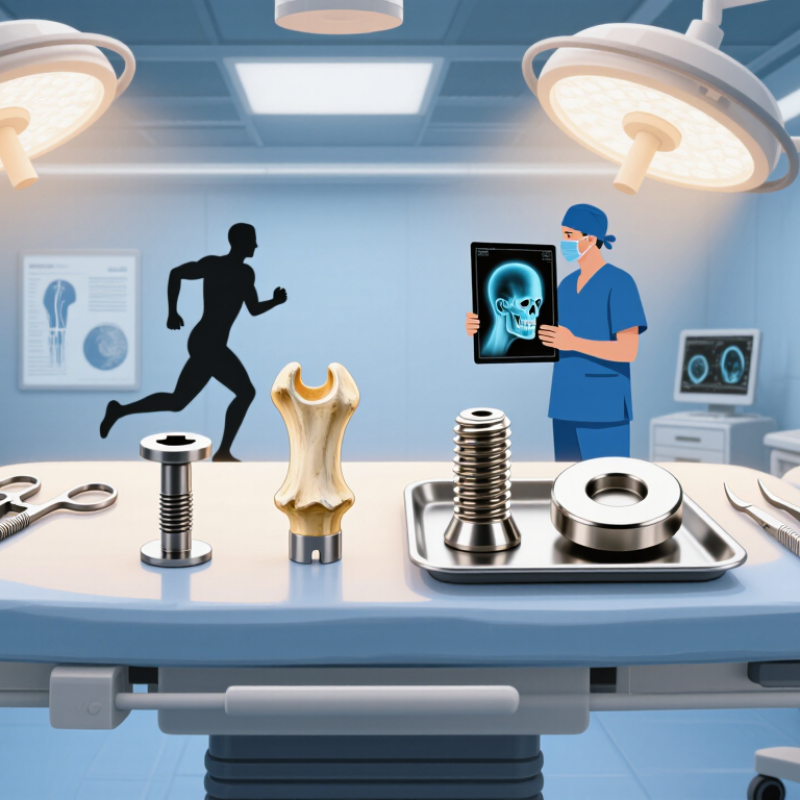
7 Tips for Choosing Orthopedic Implants for Sports Medicine

Understanding the Purpose of Orthopedic Implants in Sports Medicine

Orthopedic implants in sports medicine help stabilize injured structures while the body heals. Anchors can secure repaired tendons to bone; screws or buttons may hold a ligament graft in place. They support healing rather than instantly restoring strength. National Safety Council’s Injury Facts 2023 estimated 3.6 million emergency-department visits for sports and recreation injuries in 2022. That figure covers many injuries, not just those requiring implants, but it shows the scale of sports-related care. Healing takes time.

Tips: Match the implant to the repair, not just the sport. Ask how its material, size, and fixation method suit the bone and tissue involved. Consider expected loading, such as a runner’s repeated knee flexion or a swimmer’s overhead shoulder motion. Confirm how implant placement may affect rehabilitation and follow-up imaging.

A useful discussion also covers trade-offs: fixation strength, tissue quality, bone density, and the patient’s activity goals. “Stronger” is not automatically better. An implant that works well in one repair may not suit another. Surgeons assess these details alongside imaging and examination findings; patients should ask about alternatives, recovery milestones, and possible complications. Plans can change during surgery. That uncertainty deserves an honest conversation.

Assessing the Injury, Anatomy, and Treatment Goals

Choosing an implant starts with defining the injury, not reaching for a familiar device. A small avulsion near a tendon attachment may need a different fixation strategy than a broad ligament tear. Review imaging alongside examination findings; scans may not show tissue quality or instability clearly. Consider whether the injury is acute, chronic, or revised, since scar tissue and bone loss can affect fixation. Details matter.

Tip: Match the fixation method to the tissue and bone available. An anchor may not hold well in weak or thin bone, even when the device itself is strong. Account for nearby growth plates in younger athletes, and protect nerves, cartilage, and joint surfaces during planning. No implant fixes poor biology.

Treatment goals should reflect the athlete’s sport, position, and return demands—not only the scan. A pitcher’s shoulder, a runner’s knee, and a contact athlete’s ankle face different forces. Clarify whether the goal is stable healing, restored motion, or support under repeated loading. Compare implant profile and removal considerations with the rehabilitation plan. If the examination and imaging disagree, pause and reassess; a tidy answer is not always the right one.

7 Tips for Choosing Orthopedic Implants for Sports Medicine — Assessing the Injury, Anatomy, and Treatment Goals

Tip Assessment focus Relevant anatomy or injury Implant considerations Treatment goal and practical check
1. Define the injury precisely Confirm the injured structure, tear or fracture pattern, tissue quality, and whether the problem is acute or chronic. Combine clinical examination with imaging when appropriate. Examples include ligament rupture, meniscal tear, tendon injury, cartilage damage, and fracture. The injury type helps determine whether fixation is needed and what form it may take, such as a suture anchor, interference screw, or plate-and-screw construct. Match the implant strategy to the diagnosed pathology; an implant should not substitute for accurate diagnosis or appropriate nonoperative care when that is suitable.
2. Map the anatomy and bone quality Consider bone dimensions, bone density, growth-plate status, nearby nerves and vessels, and available space for safe fixation. Small bones, osteoporotic bone, narrow tunnels, and open growth plates can affect fixation options and placement. Implant size, fixation method, and placement must suit the patient’s anatomy. In skeletally immature patients, techniques are planned to minimize risk to growth plates. Review relevant imaging and plan safe trajectories and fixation points; individual anatomy may rule out an otherwise familiar option.
3. Match fixation to the tissue and load Assess what is being secured, the expected forces, and whether the tissue can hold sutures or fixation during healing. For example, tendon-to-bone repairs and ligament reconstructions have different fixation demands from fracture fixation. Anchors, screws, buttons, and plates serve different purposes. Selection depends on the procedure, tissue quality, bone purchase, and the surgeon’s technique. Seek stable fixation appropriate to the repair while avoiding unnecessary implant bulk or complexity.
4. Consider the healing environment Evaluate the biological potential for healing, blood supply, tissue condition, and any factors that may impair recovery. Meniscal repairs, tendon repairs, ligament reconstructions, and fractures heal through different biological processes. Some procedures use implants for fixation; others rely mainly on grafts, sutures, or biological healing. An implant does not itself guarantee tissue healing. Choose a plan that supports the specific healing process and account for patient factors such as smoking, diabetes, and adherence to rehabilitation.
5. Weigh material and removal considerations Review relevant allergies, prior reactions, imaging needs, expected implant duration, and the possibility of future procedures. Material options used in orthopedic devices can include metals, polymers, and bioabsorbable materials, depending on the device and indication. Material choice involves trade-offs. Absorbable devices do not eliminate the need to consider degradation and tissue response; permanent devices may remain in place unless removal is indicated. Check device-specific compatibility and patient history. Do not assume that one material is universally preferable or that routine removal will be needed.
6. Plan for the intended activity and rehabilitation Clarify the patient’s sport, work demands, goals, and willingness to follow a staged rehabilitation program. Return-to-sport demands vary by sport, position, movement pattern, and the structure repaired or reconstructed. Implant fixation is only one part of treatment. The procedure, graft or tissue healing, strength recovery, and rehabilitation plan all influence progression. Set realistic milestones based on clinical recovery and functional testing rather than assuming that implant choice alone determines return-to-play timing.
7. Balance benefits, risks, and evidence Discuss expected benefits, alternatives, potential complications, and the quality of evidence for the proposed approach. Potential concerns vary by procedure and may include infection, irritation, fixation failure, stiffness, or the need for additional treatment. Use a device and technique appropriate for the indication and consistent with applicable clinical guidance. Consider the consequences if fixation is insufficient or an implant causes symptoms. Make the decision through shared discussion between the patient and qualified clinician, tailored to the diagnosis, anatomy, goals, and individual risks.

Clinical note: This table is general educational information, not a device recommendation or substitute for evaluation by a qualified orthopedic clinician.

Comparing Implant Materials, Designs, and Fixation Methods

Tip 1: Match the material to the patient and procedure. For ACL reconstruction, graft choice matters as much as the fixation device. The AAOS 2022 Clinical Practice Guideline recommends considering autograft for young or active patients, because allografts carry greater failure risk in these groups. Autograft tissue avoids donor processing, but harvesting it can cause pain at the donor site. There is no perfect option.

Tip 2: Compare designs by the loads and anatomy involved. A small interference screw may secure a tendon graft inside a bone tunnel, while a cortical button suspends it beyond the tunnel. Material choices include metal, polymers, and bioabsorbable composites. Check whether the implant fits the tunnel size, allows reliable placement, and suits planned imaging. A sleek design is not automatically better. Surgeon familiarity matters, too.

Tip 3: Assess fixation as a system. Bone quality, graft type, tunnel position, and rehabilitation demands all influence stability. The AAOS guideline supports using evidence-informed graft selection rather than assuming one method suits every athlete. Ask how fixation will perform during early loading and whether removal or imaging could become difficult. Evidence can be incomplete; document the trade-offs, not just the device choice.

Evaluating Safety, Durability, and Activity Requirements

Tip 1: Match the implant to the activity, not just the injury. A tennis player’s shoulder faces repeated overhead motion; a runner’s knee absorbs thousands of impacts. Discuss your sport, training frequency, and return-to-play goals with an orthopedic specialist. The right choice depends on your anatomy and procedure, too.

Tip 2: Ask how safety will be assessed. Your care team should review medical history, allergies, bone quality, and possible interactions with imaging or other treatments. Ask what warning signs need prompt attention after surgery. No implant removes every risk. Clear answers matter.

Tip 3: Consider durability and daily demands. Find out how the implant is fixed, what loads it is expected to handle, and whether follow-up imaging is planned. Rehabilitation affects the outcome. A durable device still needs time and careful progression before hard cutting, jumping, or contact drills.

Bring questions. Take notes. A checklist can help, though it may miss what matters to you. Be candid about your goals and concerns, including a wish to return quickly. Your surgeon can explain trade-offs and help set a realistic activity plan.

Selecting an Implant with Clinical Evidence and Recovery Needs in Mind

Choosing an orthopedic implant starts with the injury, not the catalogue. For a pivoting athlete, the surgeon should weigh fixation strength, bone quality, tissue condition, and the sport’s repeated loading. A small detail matters: a runner’s needs may differ from those of a basketball player who cuts and lands hard. Compare clinical studies that match the procedure and patient group, and check how outcomes were measured, for how long, and how often revisions occurred.

Recovery expectations deserve equal attention. A 2014 British Journal of Sports Medicine systematic review covering 69 studies and 7,556 athletes found that 81% returned to some sport, but only 65% returned to their pre-injury level. Just 55% returned to competitive sport. These figures describe ACL reconstruction outcomes, not the performance of any single implant. That evidence is useful, but not tidy. It shows why device choice alone cannot promise a return date.

Ask how the implant’s design and fixation method fit the planned rehabilitation, including early weight-bearing or range-of-motion limits. Review device-specific complication and revision data, and confirm that follow-up is long enough to matter. A published result may not reflect a younger athlete’s workload. Discuss trade-offs plainly: preserving bone, achieving stable fixation, and avoiding unnecessary restrictions can pull in different directions. The best-supported choice is the one that fits the patient, the procedure, and a realistic recovery plan.

FAQS

How should graft choice be considered for ACL reconstruction?

For young or active patients, autograft may be considered because allografts carry greater failure risk in these groups. Harvesting can cause donor-site pain. No perfect option.

What is the difference between an interference screw and a cortical button?

An interference screw can secure a tendon graft inside a bone tunnel. A cortical button suspends the graft beyond the tunnel. Placement and anatomy matter.

Which implant materials may be used for fixation?

Options include metal, polymers, and bioabsorbable composites. The material should suit the procedure, tunnel size, and planned imaging. Sleek is not always better.

What factors affect fixation stability?

Bone quality, graft type, tunnel position, and rehabilitation demands all matter. Fixation is a system, not just one device.

How can surgeons compare clinical evidence?

Look for studies involving similar procedures and patient groups. Check how outcomes were measured, follow-up length, and revision rates. Evidence can be uneven.

What do return-to-sport figures show after ACL reconstruction?

One review found 81% returned to some sport, 65% to their previous level, and 55% to competition. These figures do not predict one person’s recovery.

How should implant choice relate to rehabilitation?

Ask how fixation fits planned weight-bearing and range-of-motion limits. A runner and a basketball player may face different loads.

What trade-offs should patients discuss with their surgeon?

Discuss stable fixation, bone preservation, imaging, and possible removal. These goals can conflict. The evidence may not settle every choice.

Conclusion

Choosing orthopedic implants for sports medicine requires balancing the demands of the injury with the athlete’s anatomy, treatment goals, and expected activity level. How to select orthopedic implants for sports medicine applications begins with understanding what the implant must accomplish, such as stabilizing a repair or supporting tissue healing. The injury’s location and severity, bone quality, and relevant anatomical features can all influence which approach is appropriate.

Next, compare available materials, designs, and fixation methods, considering how each may perform under repeated movement and sport-related stress. Safety, durability, compatibility with the patient’s needs, and the quality of clinical evidence should also guide evaluation. Recovery requirements matter: an implant choice should fit into a realistic rehabilitation plan and support a gradual return to activity. Ultimately, selection is individualized, and the treating clinician should weigh the available evidence alongside the patient’s goals and circumstances.

Liam

Liam

Liam is a dedicated marketing professional with a profound expertise in the industry, where he excels at highlighting the unique advantages of our core products. With a keen understanding of market trends and consumer needs, Liam frequently updates our company’s professional blog, providing......